
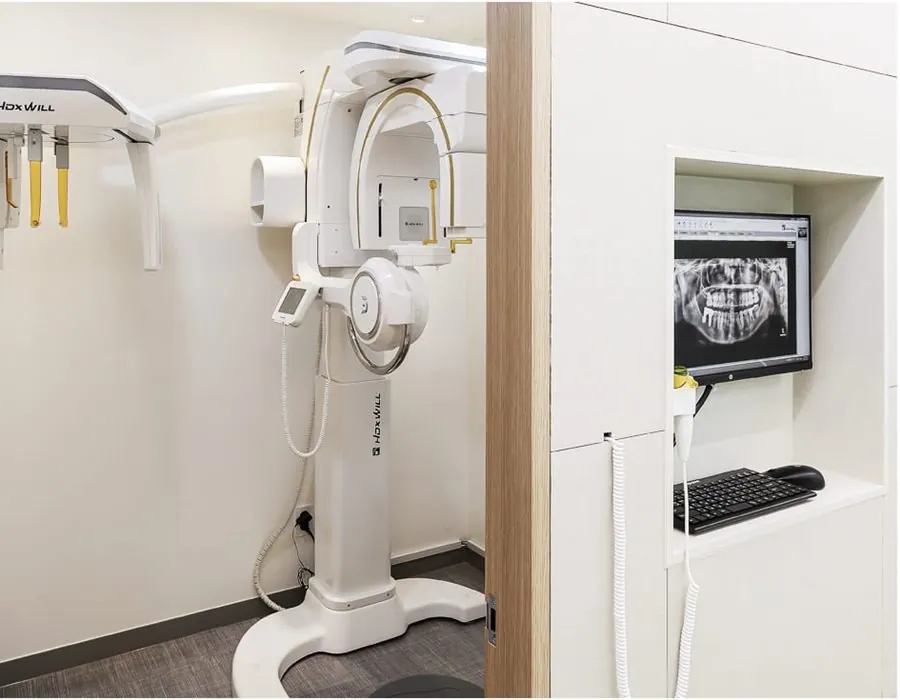
A dental implant replaces a missing tooth by placing an artificial root in the gap and attaching a tooth-shaped restoration on top, restoring both chewing function and appearance. At Soul Dental Clinic, treatment is based on 3D CT diagnosis, and a board-certified specialist in Advanced General Dentistry handles everything from implant placement to the final restoration.
What is a dental implant?
In implant treatment, an artificial root made of titanium (the fixture) is placed in the jawbone. Once it has firmly bonded with the bone (osseointegration), an abutment and crown are attached. The neighboring teeth do not need to be reshaped, and implants offer stable chewing, which is why they are a widely chosen treatment after losing a tooth.
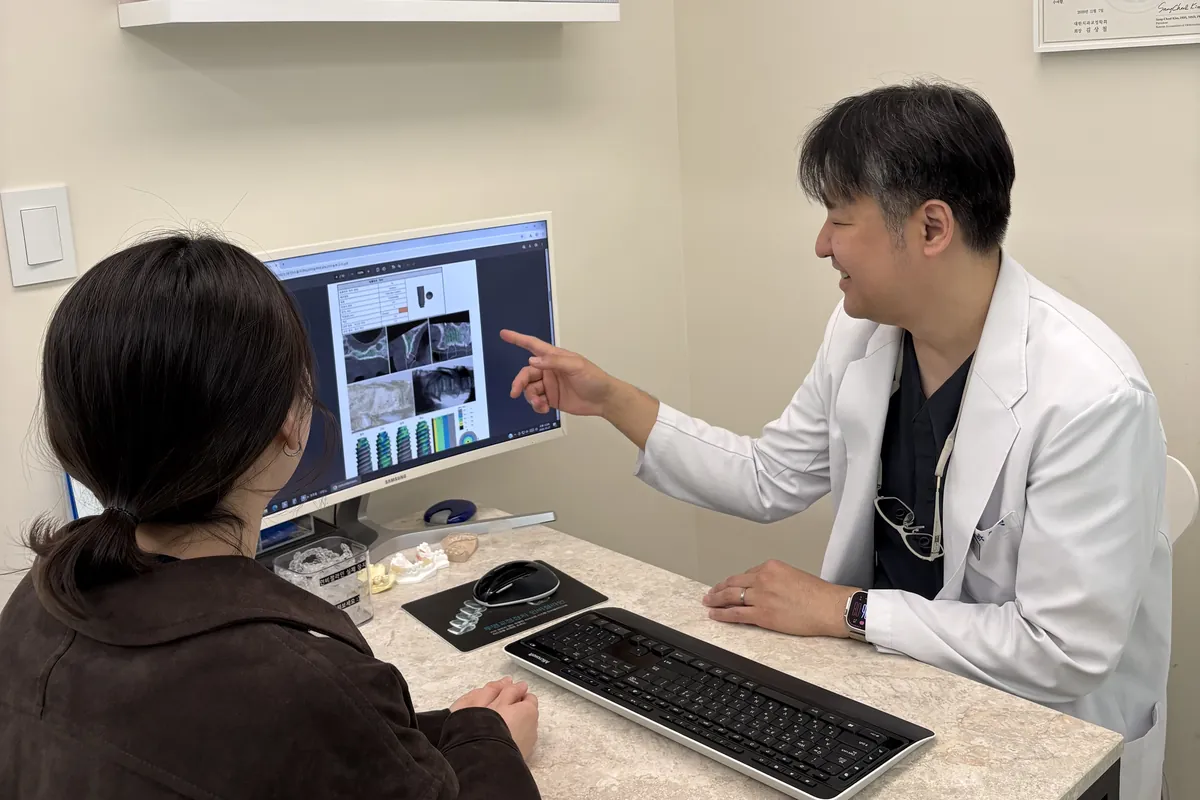
For a successful implant, it is important to accurately assess the quantity and quality of the jawbone, the position of the nerve canal and maxillary sinus, and your bite. At Soul Dental Clinic, we check the thickness and height of the bone in 3D with a CT scan and then plan the position and angle of the implant.
Who is it for?
- People who have lost teeth due to decay, gum disease or an accident
- People who find dentures uncomfortable and want fixed teeth
- People who do not want to have neighboring teeth reshaped for a bridge
- People whose older implants or restorations need to be checked again
- People who have several missing teeth and find it hard to chew
- People aged 65 or older who want to check whether they are eligible for implants covered by National Health Insurance
Treatment process
- STEP 1Examination · 3D CTAn oral exam and 3D CT scan are used to check the bone and the position of the nerve canal, and we explain the treatment plan.
- STEP 2PlacementUnder local anesthesia, the implant is placed in the planned position. If there is not enough bone, a bone graft can be done at the same time.
- STEP 3Osseointegration periodWe wait until the implant has firmly bonded with the bone. This usually takes several months and varies from person to person.
- STEP 4Restoration · MaintenanceAn abutment and crown are attached to complete treatment, and the gums and bite are checked at regular check-ups.
Implants at Soul Dental Clinic
- Detailed 3D CT diagnosisWe check the thickness and height of the bone and the nerve canal in 3D images before planning the implant position.
- Specialist in Advanced General DentistryOur Chief Dentist, a Board-certified Specialist in Advanced General Dentistry (Ministry of Health and Welfare, Korea) and a member of the Korean Academy of Implant Dentistry, handles both implant placement and the restoration.
- Clear explanation and consentWe first explain the diagnosis, treatment plan and costs, and begin treatment only after obtaining your consent.
Aftercare and precautions
- On the day of surgery, avoid hot or spicy foods and take any prescribed medication as directed.
- Smoking and drinking can affect wound healing and osseointegration, so please avoid them during treatment.
- Gum inflammation can also develop around implants, so clean carefully with a toothbrush and interdental brush.
- Regular check-ups every 6 to 12 months are used to check for loose screws, gum condition and the bite.
Frequently asked questions
How long does implant treatment take?
After the implant is placed, it needs time to bond firmly with the bone, so treatment usually takes several months. The timeline depends on your bone condition, the implant site and whether a bone graft is needed. We will give you an estimated timeline after diagnosis.
Does implant surgery hurt a lot?
The procedure is done under local anesthesia. Afterwards, most people can go about their daily lives if they take the prescribed medication and follow our aftercare instructions. The degree of discomfort varies from person to person.
Do I need a bone graft?
If the quantity and quality of your jawbone are sufficient, the implant can be placed without a bone graft. If there is not enough bone, a bone graft can be done at the same time. We decide after checking your bone with a 3D CT scan.
Are implants covered by National Health Insurance?
Patients aged 65 or older may be eligible for implants covered by National Health Insurance (up to two per lifetime), depending on certain conditions. We will let you know whether you qualify during your visit.
How long do implants last?
With regular check-ups and consistent gum care, implants can be used for a long time. Like natural teeth, they can be affected by gum disease, so we recommend check-ups every 6 to 12 months.
Book an Implant Consultation
After an examination and consultation, we will explain in detail whether treatment is possible and what it involves.